saher ahmed
Menu
Close

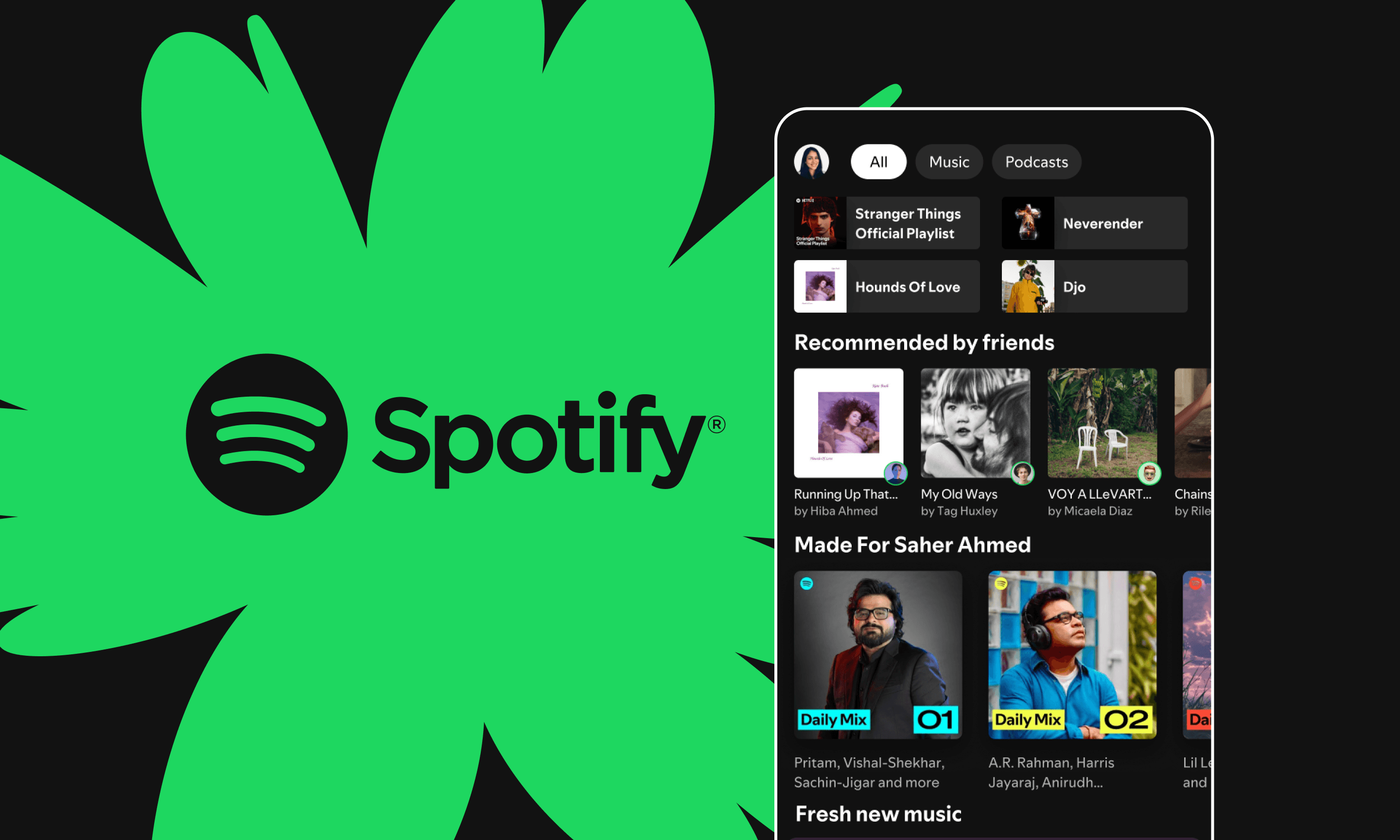
A lightweight social layer that shows friend-powered recommendations without cluttering the core listening flow
BACKGROUND
Music sharing on Spotify is stuck in 2015
I’ve always loved curating playlists and sharing music with friends. But over time, I noticed a pattern.
Whenever I sent someone a song via Instagram, WhatsApp, or any other messaging app, it feels… ephemeral. Because sometimes my friends forget to listen. Sometimes I forget who I sent what to.
Everything gets lost in long chats. No reminder. No trace.
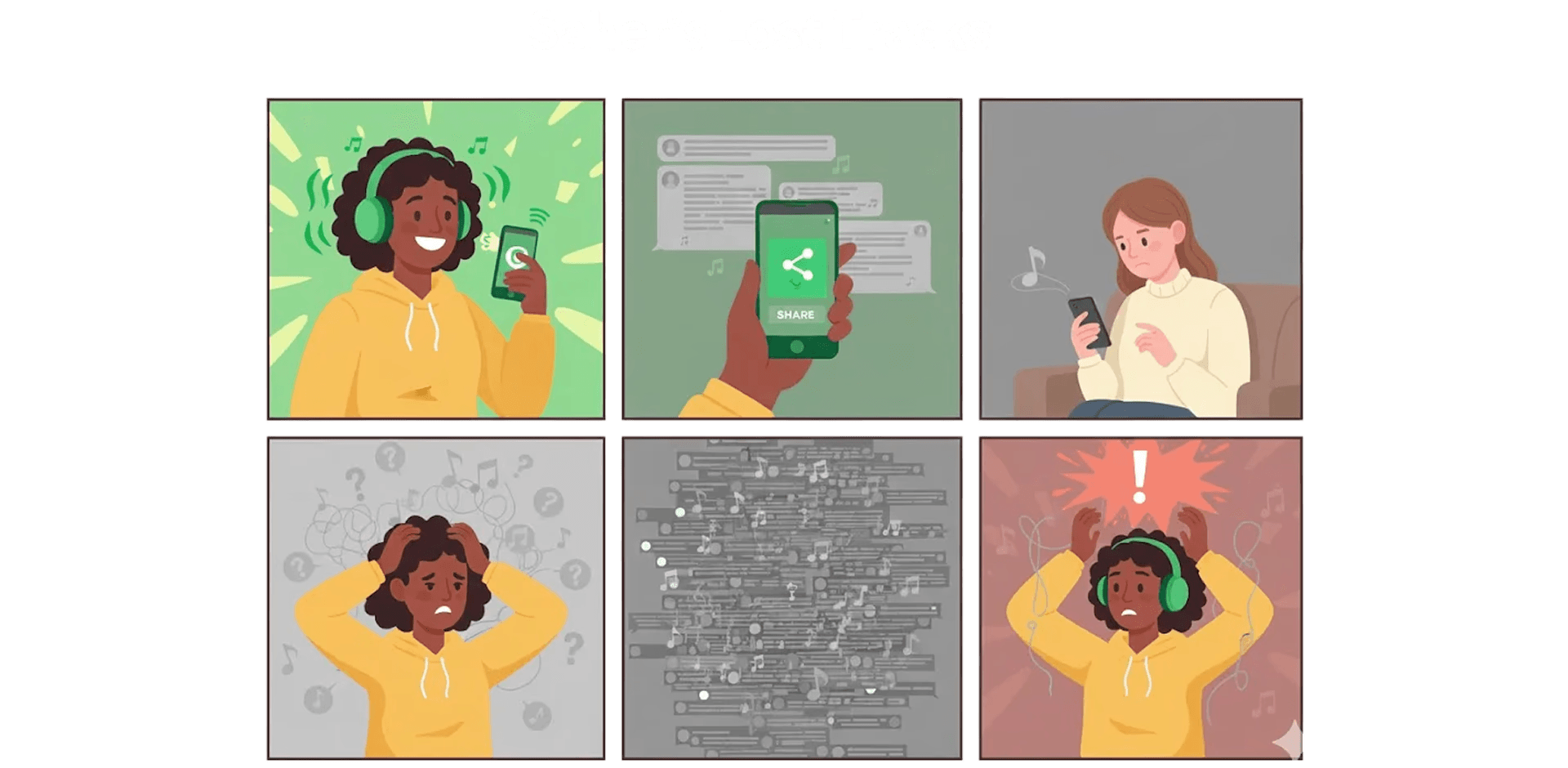
On top of that, I noticed many people around me voiced similar frustrations across tweets, Reddit threads, and app‑store reviews. Two themes kept coming up:
Socialisation feels shallow
Sharing music is messy and forgettable
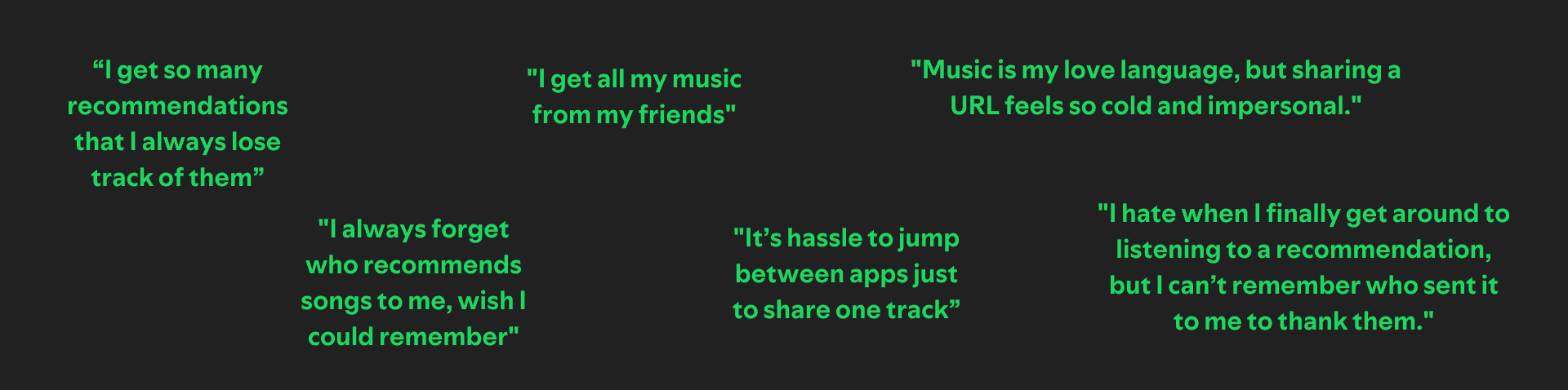
So the problem I wanted to solve was pretty simple:
To allow Spotify users to share songs and engage with friends in a way that’s effortless, trackable, and respects the core value of listening to music.
USER RESEARCH
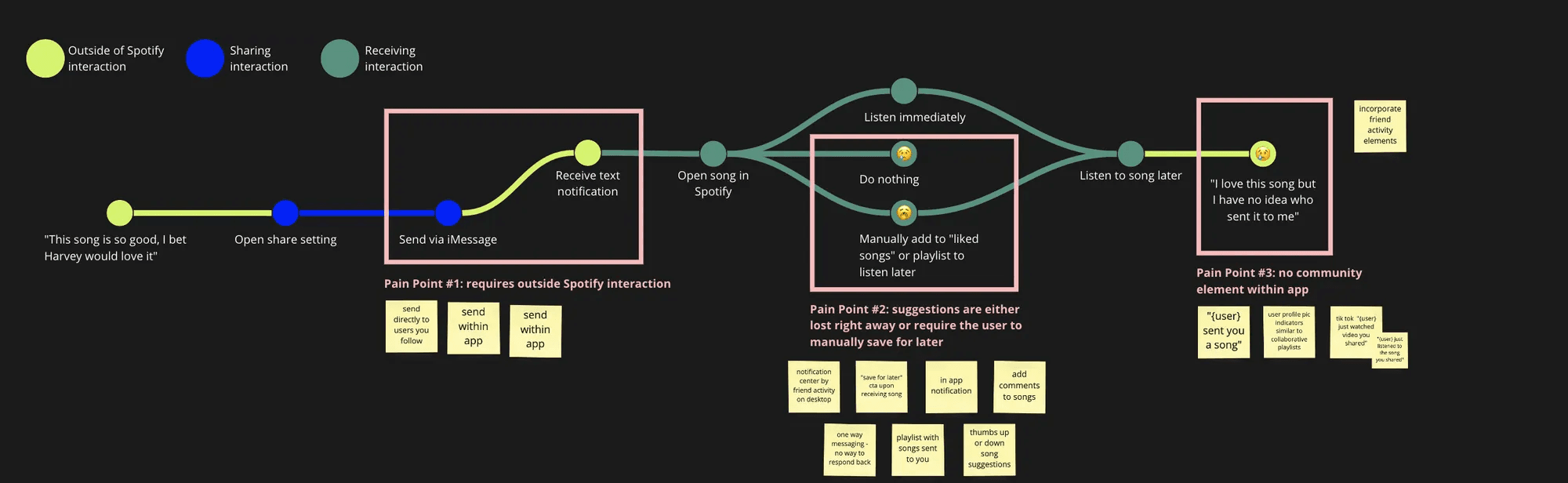
I mapped out typical user behaviours for sharing and receiving music. Two main actions emerged:
Sending a song: Users leave Spotify, open a third‑party app, paste or share a link.
Receiving a song: The link lands in a chat; a friend may click, may save, but often it gets buried since there is no persistent record inside Spotify.
COMPETITOR RESEARCH
I also reviewed major streaming services (like Apple Music and Amazon Music) and their social/sharing features.
What stood out: none provide a strong in‑app recommendation flow tied to tracking or playlists. Sharing remains largely external or relies on simple share‑sheets.
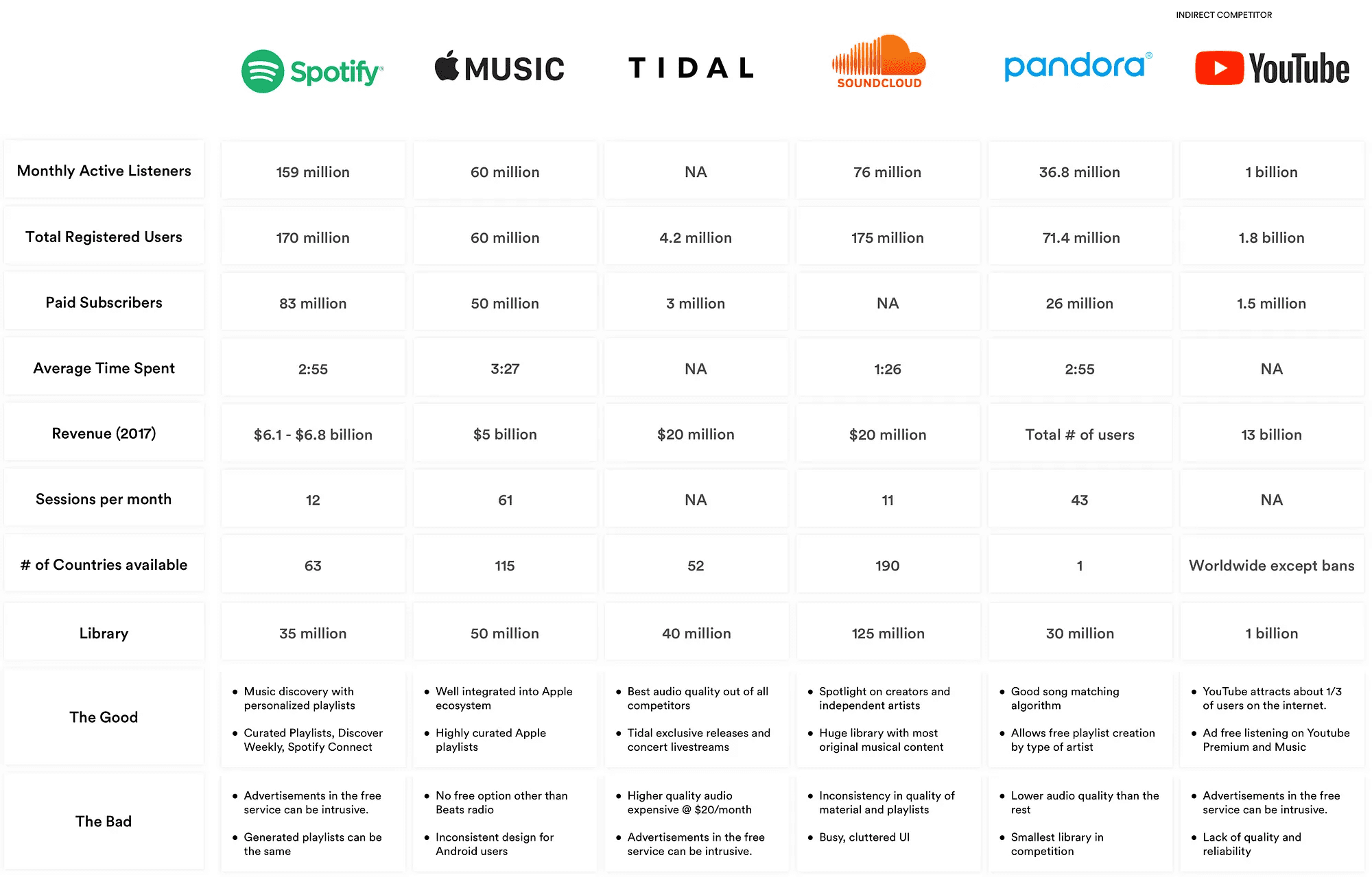
Bonus research insight: a study titled “All of Me: Mining Users’ Attributes from their Public Spotify Playlists” found that public playlists serve as rich signals of user identity, taste and social connections. That means shared music isn’t just tracks, it’s social data and potential for connection.
THE STRATEGIC CHALLENGE
My approach was simple and intentional: start small, then scale.
Using data I obtained from the Internet, I defined three-phase options so we could test their impact quickly & went ahead with Option A as the base with a few cues from Option B for engagement.
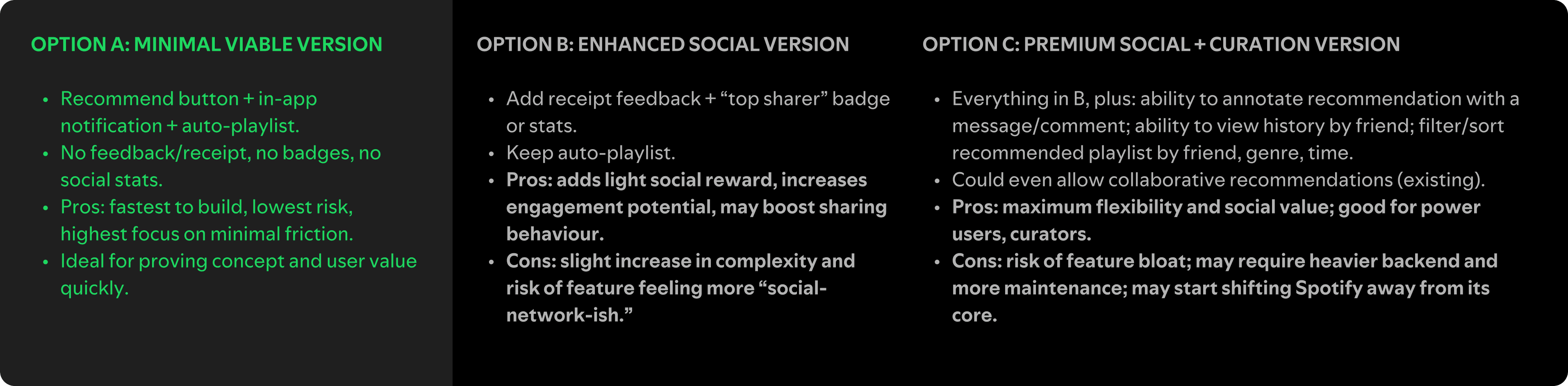
I explored lighter text-forward cards and richer thumbnail-based layouts to see which felt more native to Spotify. The thumbnail direction delivered the strongest foundation to evolve into my final option.

Exploring three scalable layout directions that balance clarity, social context and visual density
Design Approach
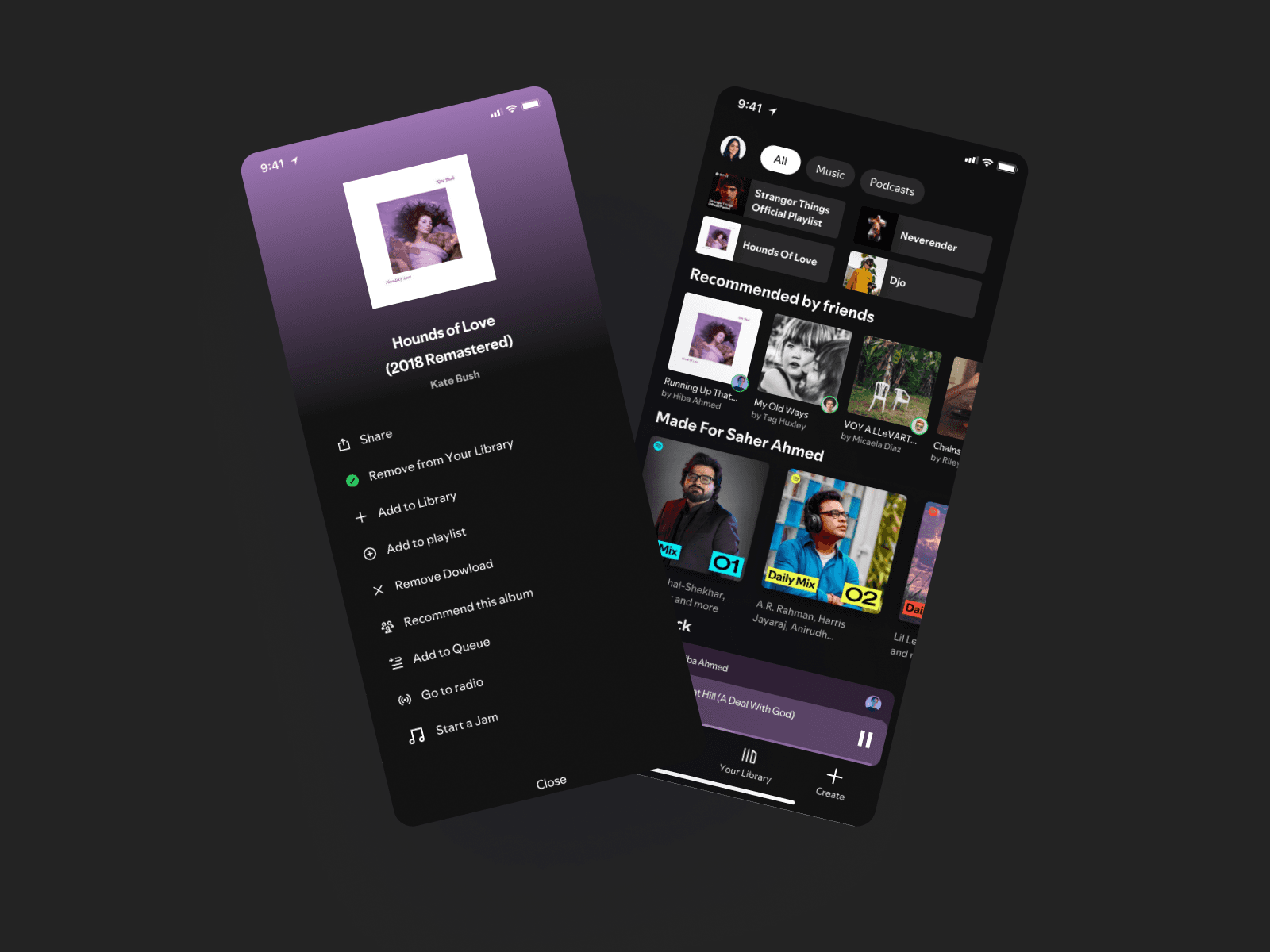
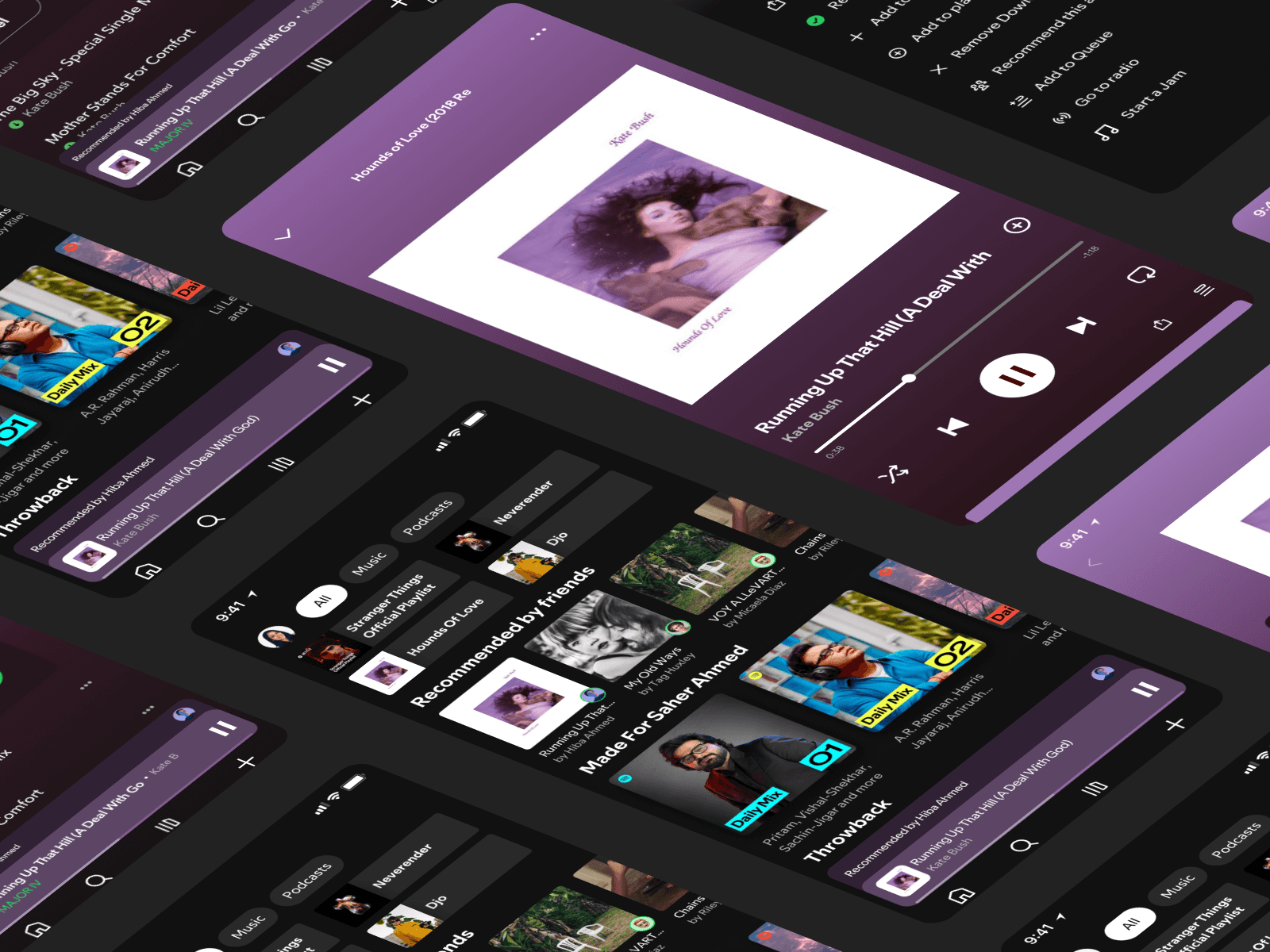
The design integrates a music recommendation feature directly into Spotify's existing flow to maximise utility while minimising UI disruption.
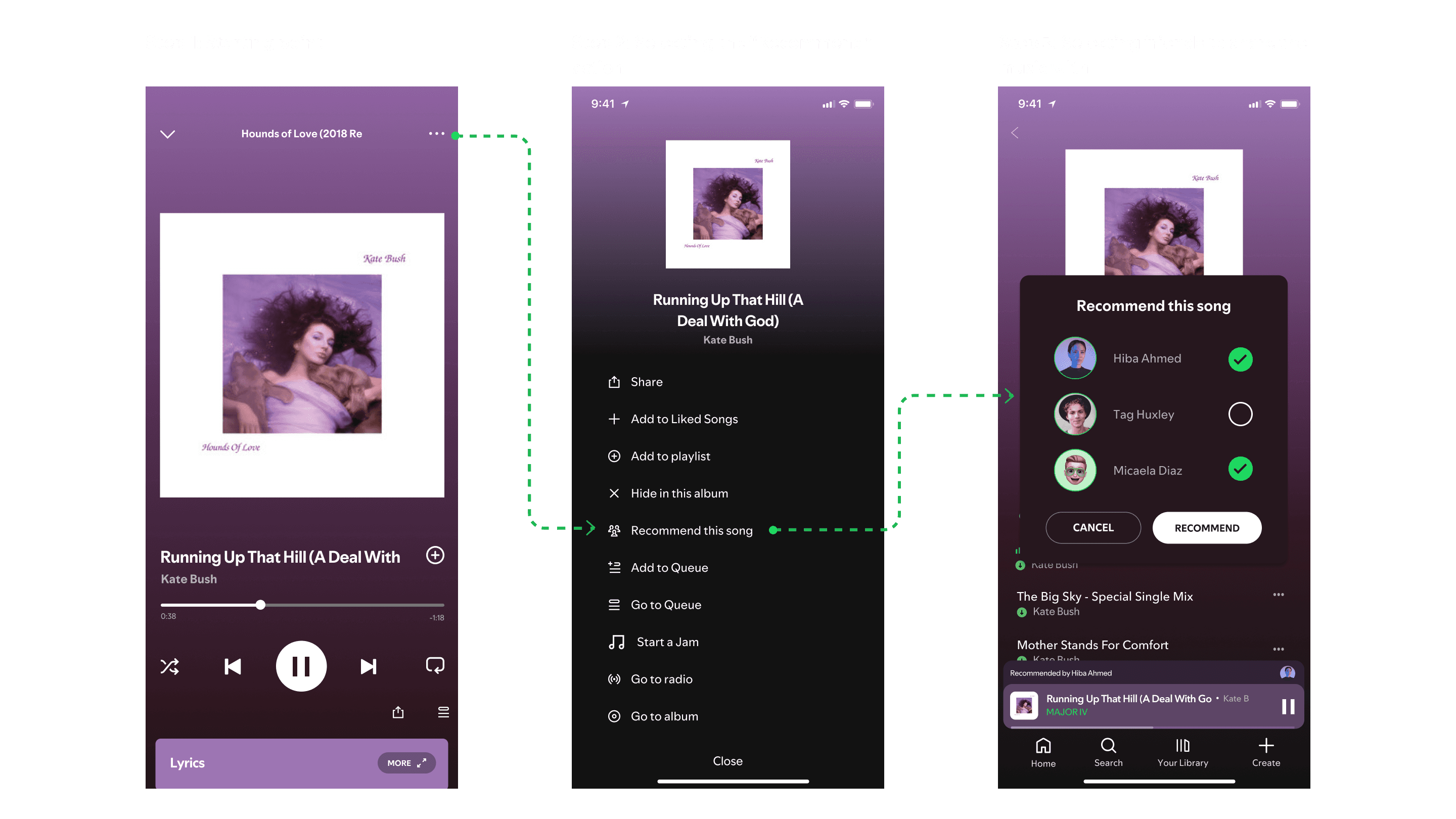
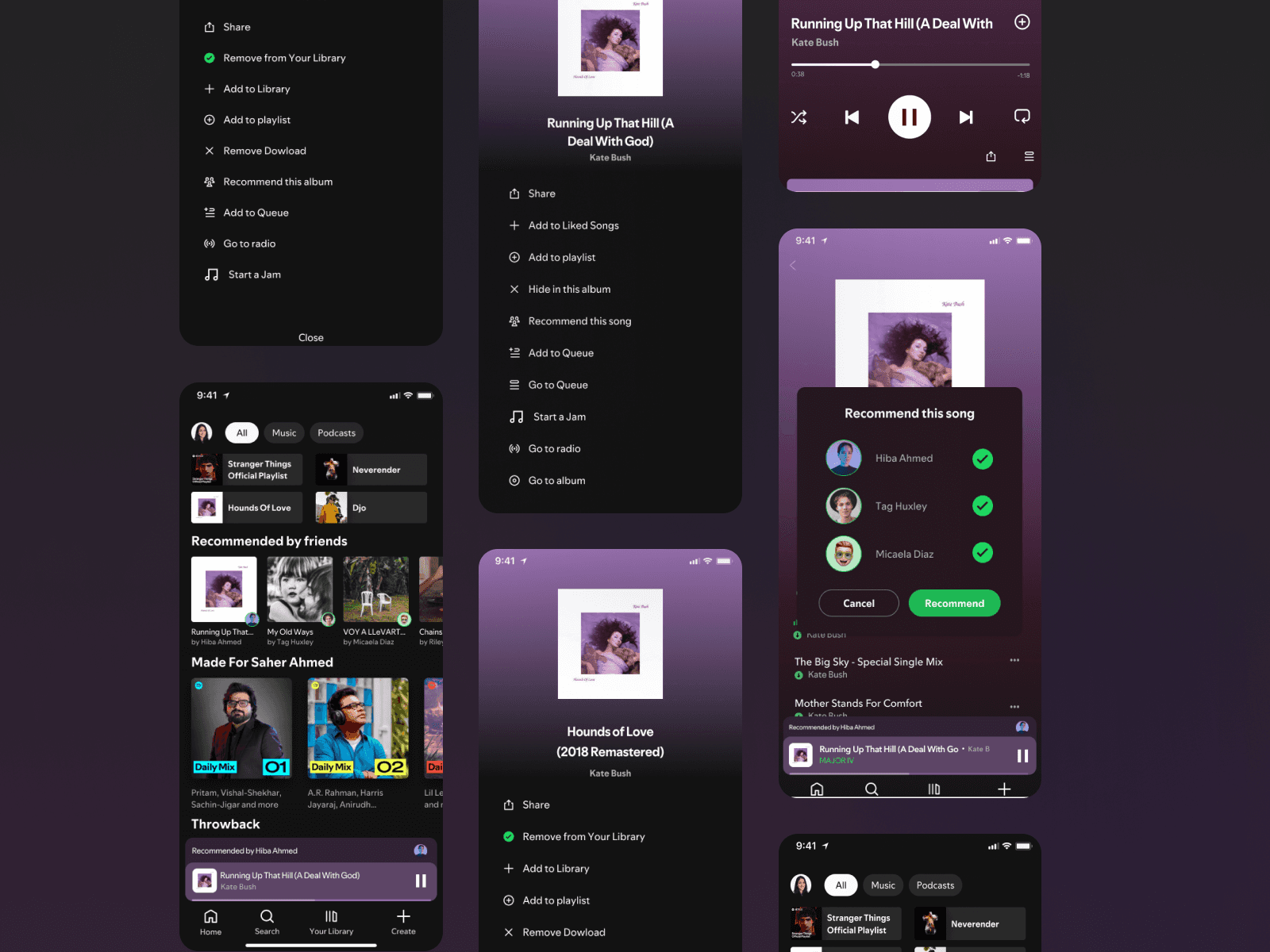
Here's the quick run-down of how a user would recommend a song to a friend:
Start the music, tap the menu, choose "Recommend this song", select your friend(s), and hit "Recommend" to send it right in the app!
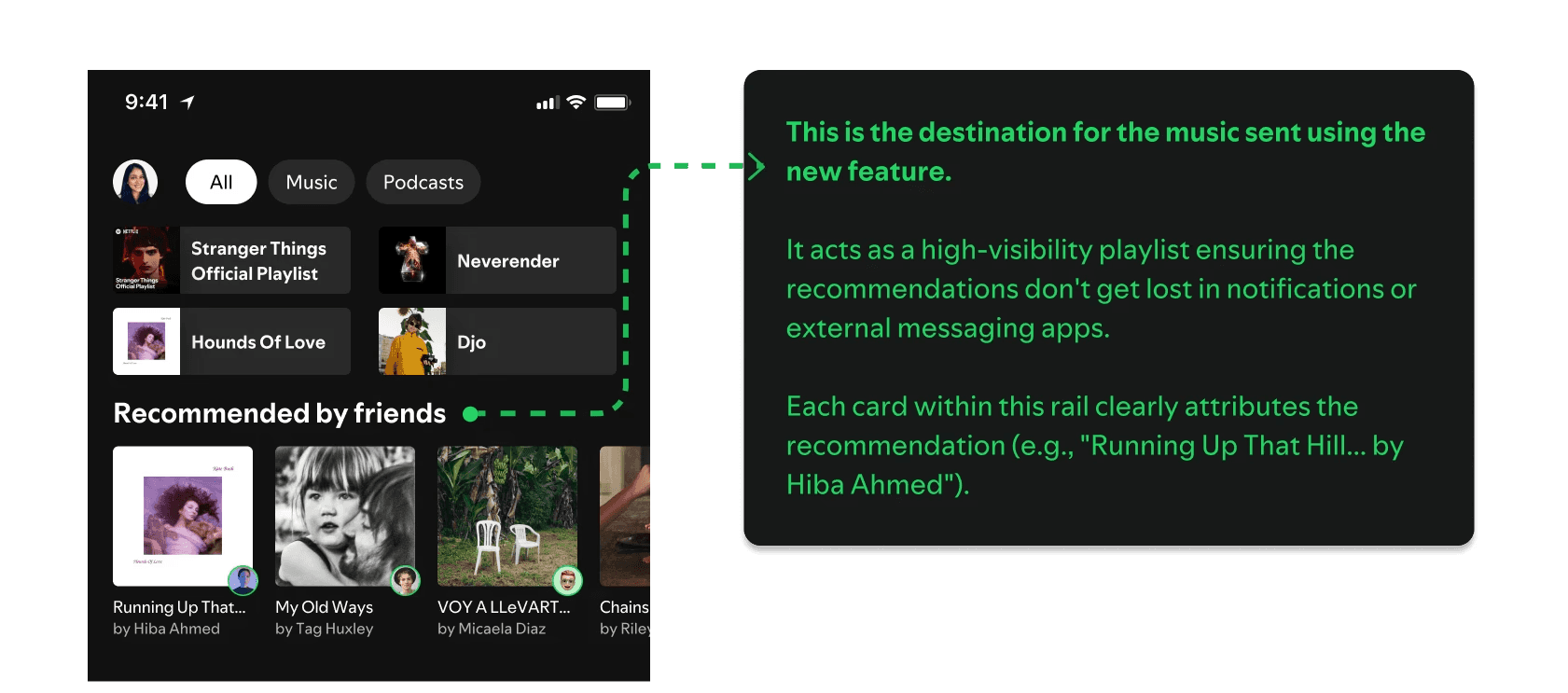
Why this direction works
It solves the core drop-off without overengineering. It respects Spotify’s identity as a discovery platform while giving users a simple, built-in loop for musical back-and-forth.
This dedicated placement directly solves the pain point of recommendations getting lost in external chats by giving them a permanent, high-value home within the Spotify app itself.
Results & Metrics
If shipped, this feature would create
Higher share engagement inside Spotify instead of external apps
A higher play rate on recommended tracks
Increased retention among socially motivated users
A lightweight social layer that does not compromise Spotify’s brand or simplicity
Reflection
Why I Enjoyed Working on "Recommend to friends"
My enthusiasm for this project stems from the satisfaction of solving a very real, common, and frustrating user pain point, the "lost recommendation", with maximum efficiency.
The design flow is simple and friendly because it leverages the familiar three-dot menu to seamlessly insert the "Recommend" action, avoiding disruptive new tabs or complicated settings.
It focuses solely on the music, instantly delivering recommendations to a dedicated easy-to-find rail on the friend's Home screen, all while giving the sender peace of mind with simple visual tracking (a checkmark) to confirm the music actually got listened to.
It's a quick, thoughtful way to share tunes right where the music lives!