saher ahmed
Menu
Close

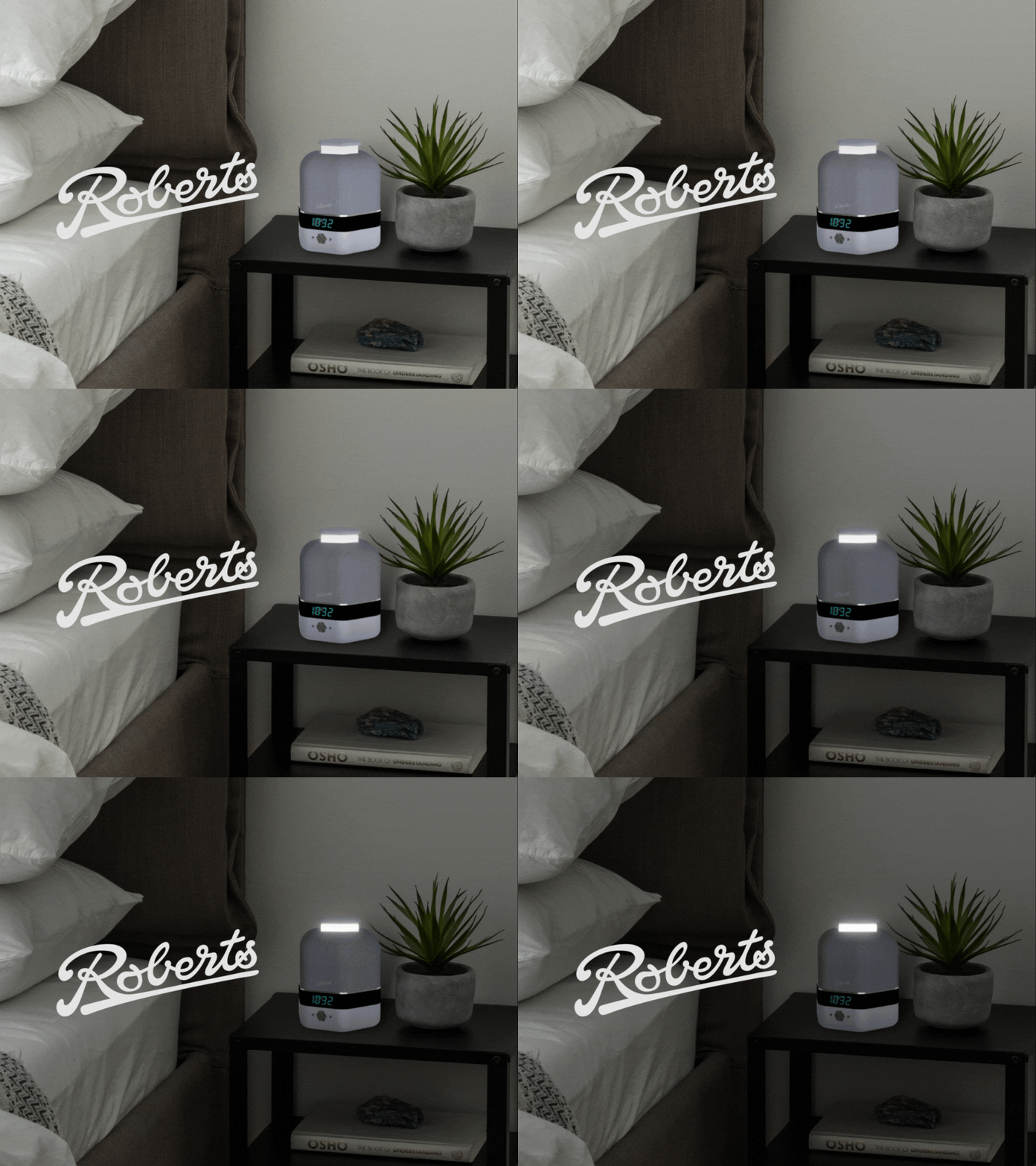
A hexagonal bedside speaker designed for restful siestas and flexible wellbeing.
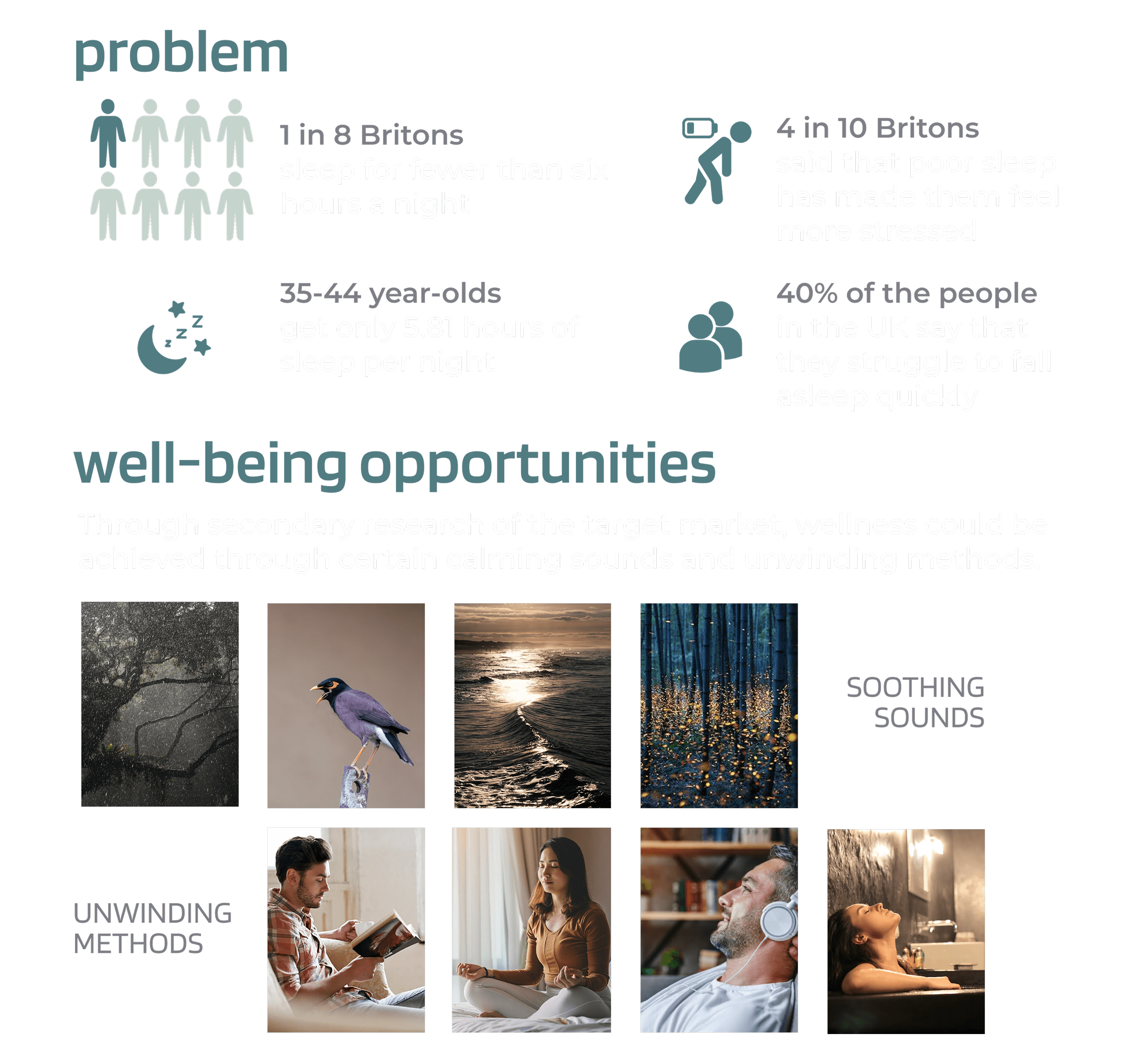
The goal was to rethink Roberts’ bedside product for modern wellbeing-focused users.
I observed that Roberts’ design language lacked consistency across their product line and sought to create a cohesive, flexible solution that reinforced their brand identity while promoting relaxation and healthy sleep habits.
Exploring concepts and form factors to balance aesthetics and function.
I conducted competitor benchmarking of portable speakers and sleep devices, user observations and ideation workshops. I also created cardboard prototypes to test scale, form and ergonomics.
Presenting these concepts to the Roberts design team helped validate the design language, physical usability and ambient lighting approach.
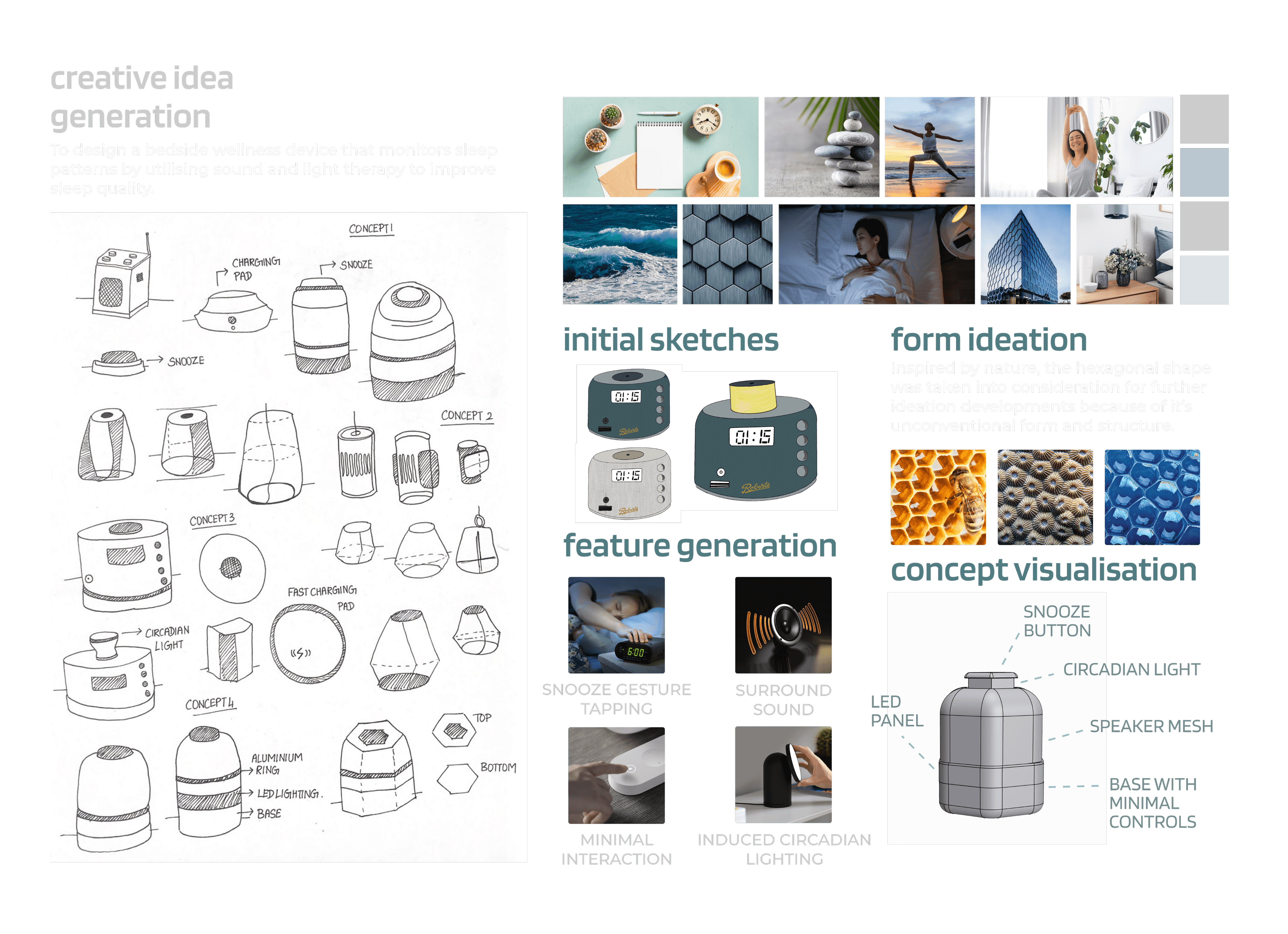
Exploring concepts and shapes to align with Roberts’ design language.
UPDATED HYPOTHESIS
Instead of just redesigning, what if I developed a holistic sleep companion?
I explored ideation through sketches, wireframes for interface ideas and rapid physical prototyping.
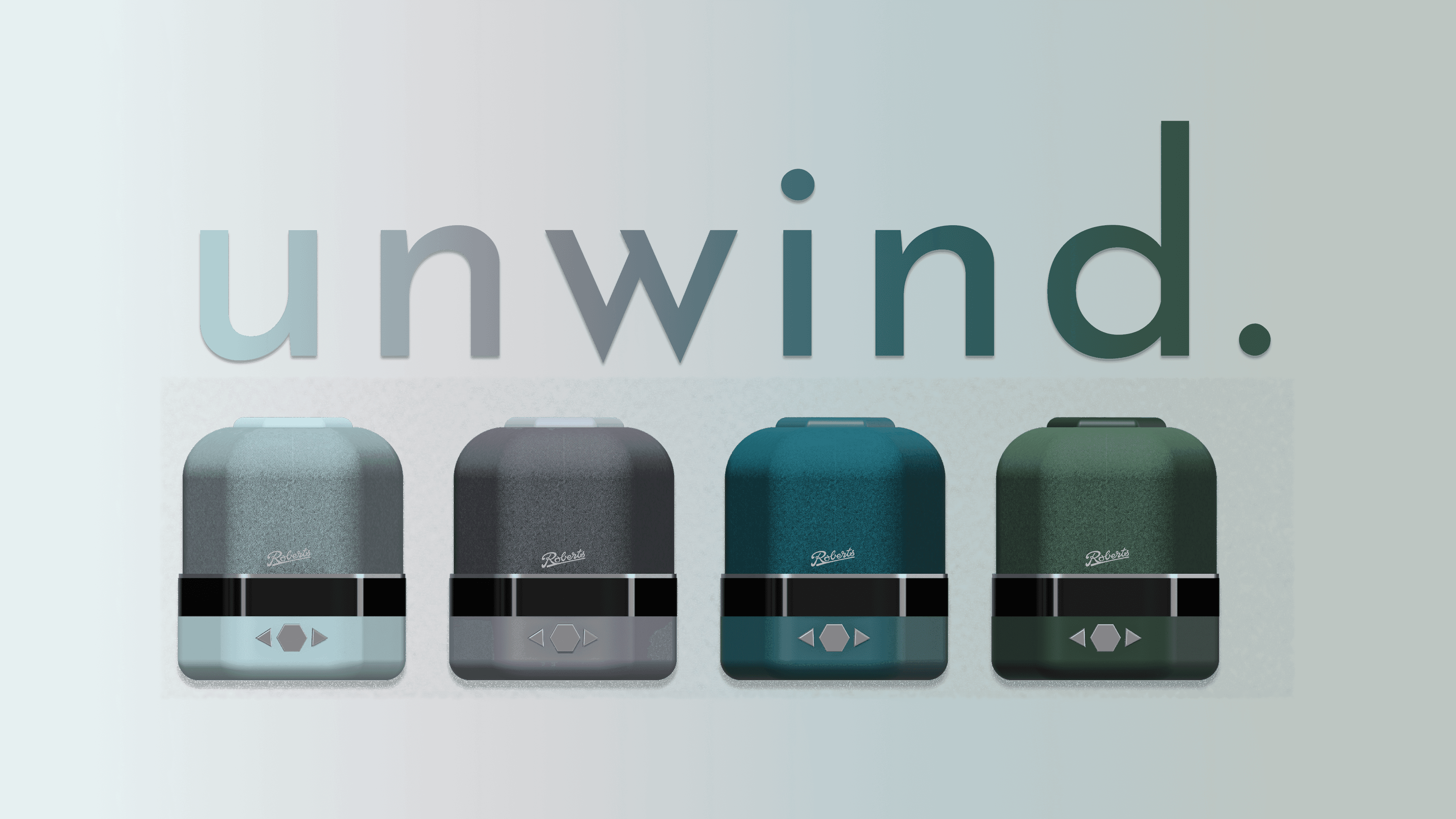
The hexagonal design offers portability, touch-friendly control surfaces and a friendly, approachable form. Materials and colours were selected to feel warm and calming.
Ambient sounds could connect with apps like Headspace, allowing users to select sleep, meditation or siesta modes. The design balances tangible interaction with the potential for a digital companion app in the future.
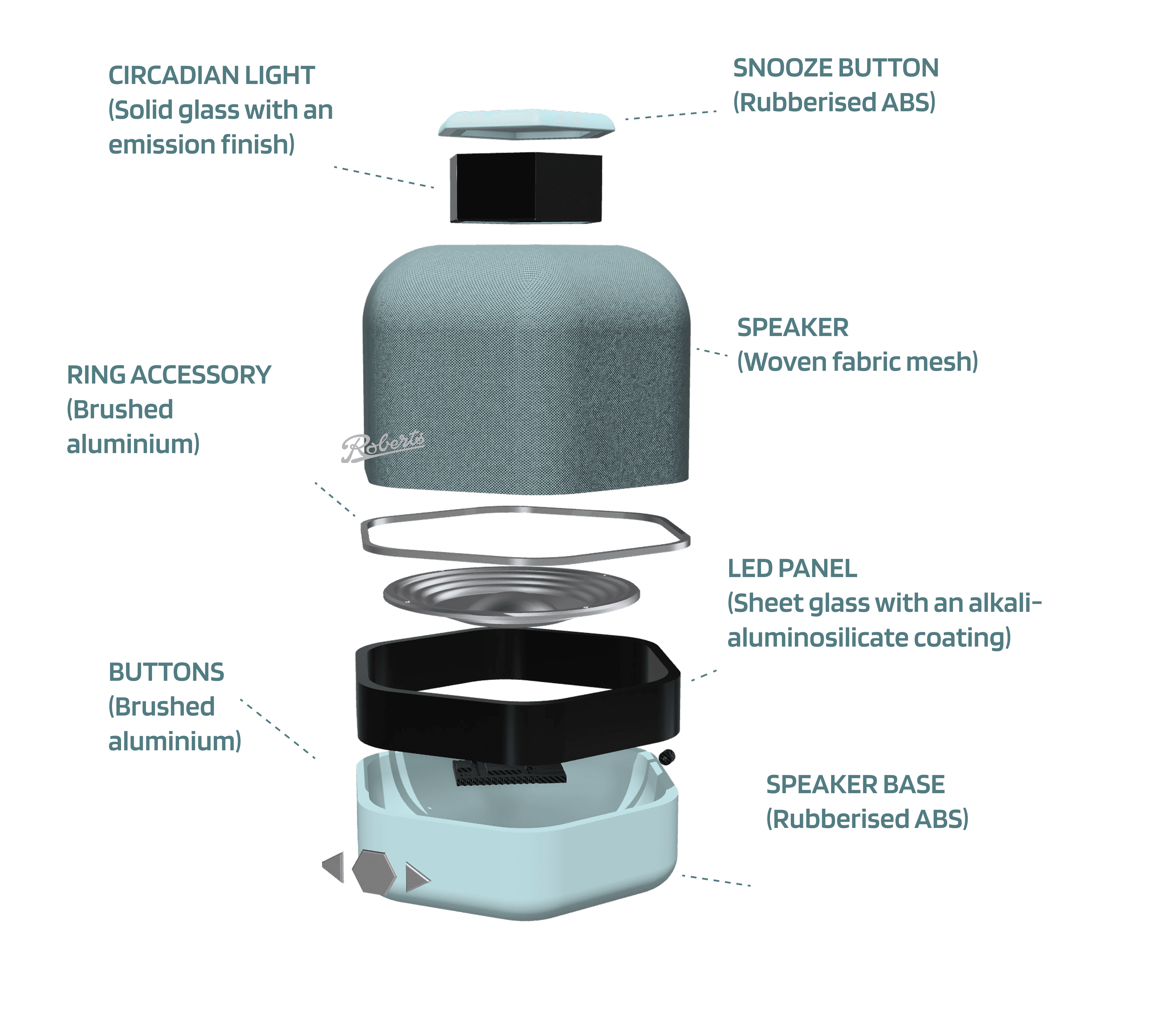
Selecting textures and finishes to create a soft, calming aesthetic.
Results & Metrics
A tangible redesign achieving academic and magazine recognition
While this was a master’s project, the outcomes were strong:
Received an A+ for the project.
Highly praised by my module tutor and presented to the Roberts design team.
Concept validated for form, usability, and brand cohesion through physical prototypes.

Reflection
Bridging PHYSICAL products and user experience taught me new perspectives
This project is featured here because it taught me how to bridge the gap between physical and digital design by creating interfaces you can actually touch, not just click.
Even though my current focus is digital product design, exploring materials, form and real-world interaction was incredibly rewarding.
Brunel Design School shaped how I think and work. It taught me discipline, collaboration, and the resilience you need to thrive in the real world. I owe a lot of that growth to my tutor and mentor, Mr. Steve McGonigall, who pushed me to design with both curiosity and intent.